
7 Reasons People Consider Shockwave Therapy for Chronic Pain
Chronic pain can affect almost every part of daily life. Whether it is persistent heel discomfort, shoulder stiffness, recurring tendon pain, or an ongoing sports injury, living with discomfort can make ordinary activities difficult. Walking, exercising, working, and even getting out of bed may become challenging when pain continues for weeks or months.
Many people in Stoney Creek, Ontario, look for non-surgical physiotherapy options that may help address persistent musculoskeletal conditions. One treatment that has gained attention in rehabilitation settings is Shockwave Therapy. It uses acoustic pressure waves directed towards specific areas of the body to stimulate biological responses within targeted tissues.
At Greenhill Physiotherapy, patients can explore physiotherapy services that address musculoskeletal concerns, movement difficulties, and physical injuries. This treatment may be considered as part of a rehabilitation program when a suitable condition is identified through clinical assessment.
But why do people consider this approach for chronic pain? What makes it relevant to sports injuries and persistent tendon conditions?
Let's explore seven reasons people may consider this treatment and how it fits into physiotherapy care.
Tendon problems are among the common causes of chronic musculoskeletal discomfort. Tendons connect muscles to bones and play an important role in everyday movement. Repetitive activities, sudden increases in exercise intensity, and repeated physical strain can contribute to tendon-related conditions.
Some examples include:
These conditions may cause discomfort during walking, lifting, running, reaching, or participating in sports.
Shockwave Therapy uses acoustic waves to deliver mechanical stimulation to an affected area. Research suggests that this stimulation may influence local cellular activity, collagen production, and tissue remodelling.
For selected chronic tendon conditions, this approach may be considered alongside progressive strengthening and other physiotherapy interventions.
The aim is not simply to address discomfort during treatment. It is also to help patients work towards improved movement and participation in everyday activities.
Heel pain can interfere with walking, standing, exercising, and completing everyday responsibilities. One common cause is plantar fasciopathy, a condition involving the thick band of connective tissue along the bottom of the foot.
People with this condition may notice:
When symptoms continue despite initial treatment, people may explore additional physiotherapy options.
Shockwave Therapy is frequently studied for chronic plantar fasciopathy. Acoustic waves are directed towards the affected region, where they may stimulate biological processes associated with tissue remodelling.
Treatment is generally considered alongside other measures, such as calf strengthening, foot exercises, activity adjustments, and suitable footwear.
The choice of treatment depends on the duration of symptoms, clinical findings, and the patient's activity requirements.
People experiencing chronic musculoskeletal pain may wish to explore conservative treatment options before considering surgical procedures.
Physiotherapy can include several approaches, such as therapeutic exercises, manual therapy, movement education, and appropriate physical modalities.
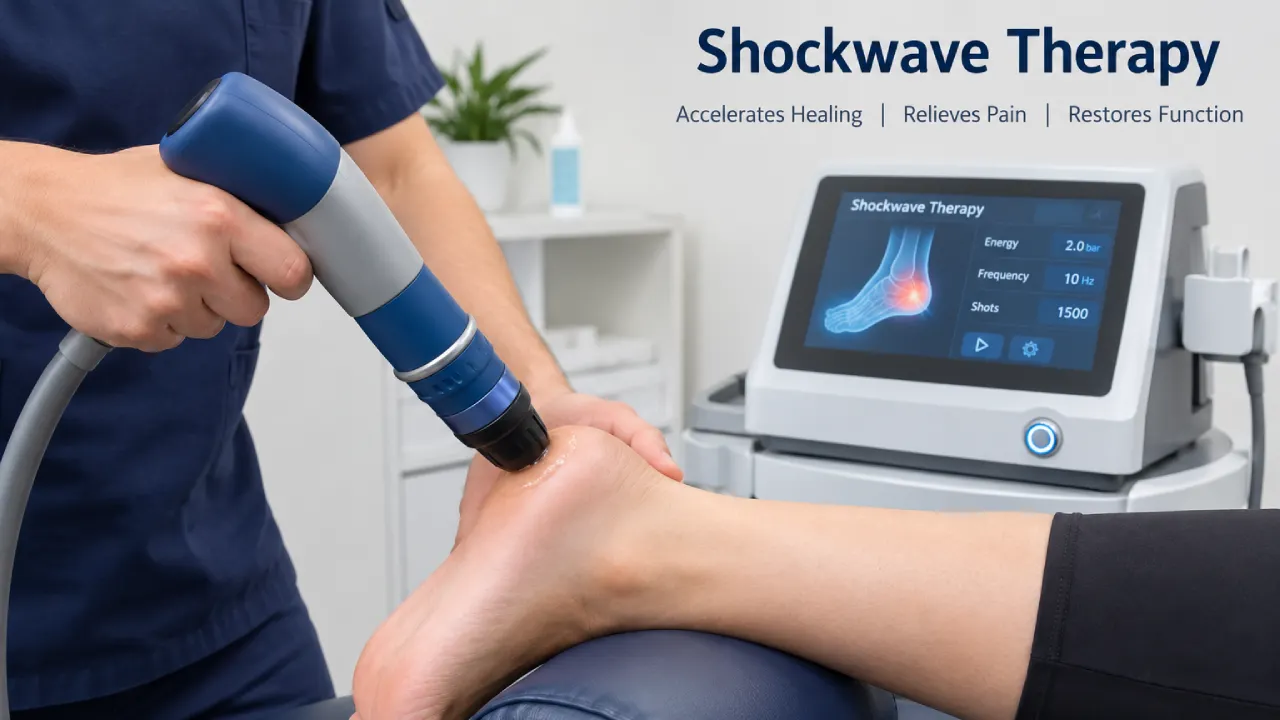
Shockwave Therapy is a noninvasive procedure that applies acoustic energy through an applicator placed against the skin. No surgical incision is required.
During a typical session, the physiotherapist identifies the treatment area and applies a coupling gel to help transmit the acoustic waves. The applicator is then positioned over the targeted tissue.
Patients may feel tapping, pressure, or temporary discomfort during the procedure. The intensity is adjusted according to the condition being treated and the individual's tolerance.
Although this approach is not suitable for every injury, it may be considered for selected chronic musculoskeletal conditions.
A clinical assessment helps determine whether conservative rehabilitation, another treatment approach, or further investigation is appropriate.
Healthy tissues rely on adequate circulation and normal biological processes to maintain their structure and function.
In chronic tendon conditions, changes in the tissue structure and local cellular environment may contribute to persistent symptoms.
Acoustic pressure waves used in Shockwave Therapy have been studied for their potential influence on several biological processes, including:
These processes may contribute to changes in the treated tissue over time.
However, the exact biological response depends on the condition, treatment settings, and individual patient factors. Research continues to investigate how these mechanisms translate into meaningful clinical outcomes.
This is one reason physiotherapists assess the underlying condition before recommending a particular treatment.
Repeated movements can place considerable stress on muscles, tendons, and surrounding connective tissues.
This is common among people who perform physically demanding jobs, participate in recreational sports, or spend extended periods completing repetitive tasks.
Examples include
Over time, these activities may contribute to conditions such as tennis elbow, Achilles tendinopathy, and shoulder tendon problems.
For selected conditions, Shockwave Therapy may form part of a physiotherapy program aimed at addressing persistent tissue-related symptoms.
Treatment is generally combined with exercises that improve strength, movement control, and the ability of the affected tissues to tolerate physical demands.
Activity modification is also important. Continuing to overload an irritated tendon may interfere with rehabilitation progress.
Patients should therefore follow a structured plan that considers their daily responsibilities, sporting activities, and current physical capacity.
One reason people consider this treatment is that it can be incorporated into a broader rehabilitation program.
A physical modality alone does not address every factor contributing to chronic pain. Muscle weakness, restricted movement, poor load management, and movement patterns may also need attention.
Physiotherapy may combine several interventions, including:
Strengthening exercises: These help develop muscle capacity and improve the ability of tendons and joints to tolerate physical activity.
Mobility exercises: These address restrictions that may affect comfortable movement.
Manual therapy: Hands-on techniques may be used to address certain joint and soft-tissue movement limitations.
Activity modification: Adjusting exercise intensity and daily physical demands can help manage excessive loading.
Shockwave treatment: Acoustic waves may be applied to selected tissues when clinically appropriate.
Combining these approaches allows the physiotherapist to address different aspects of a patient's condition rather than relying on one procedure.
For example, a person with Achilles tendinopathy may receive treatment alongside progressive calf strengthening, balance exercises, and a gradual return-to-running program.
The rehabilitation plan should change as the patient's symptoms, strength, and physical abilities develop.
Chronic pain can affect more than physical comfort. It may influence work responsibilities, recreational activities, exercise habits, and participation in family routines.
Someone with persistent shoulder pain may struggle to lift objects or reach overhead. A person with heel pain may avoid walking for extended periods. An athlete with tendon discomfort may find it difficult to complete regular training sessions.
People may consider Shockwave Therapy because they want to explore additional options within a structured rehabilitation process.
For selected conditions, treatment may contribute to changes in symptoms and physical function over time. However, results vary, and there is no guarantee that every person will respond in the same way.
A physiotherapy program should focus on meaningful activity goals, such as
Progress should be assessed through changes in symptoms, movement, strength, and functional ability.
Sports injuries can develop suddenly or gradually. A sudden injury may occur during a collision, fall, or awkward landing. Gradual injuries often develop through repeated physical loading and insufficient recovery between training sessions.
Tendon-related conditions are particularly common among active individuals. Running, jumping, throwing, and repetitive upper-body movements can place considerable stress on different tendon structures.
Shockwave Therapy has been studied in sports medicine for several conditions involving tendons, connective tissues, and certain bone-related injuries.
Here is how it may fit into sports injury rehabilitation.
Athletes may develop Achilles tendinopathy, patellar tendinopathy, or rotator cuff problems following repeated loading.
Acoustic pressure waves are directed towards the affected tissue. Research suggests that this mechanical stimulation may influence cellular activity and tissue remodelling.
It may be considered as an additional treatment for selected chronic tendon conditions, particularly when symptoms persist despite an appropriate rehabilitation program.
Runners and athletes who spend considerable time on their feet may develop persistent heel discomfort.
Plantar fasciopathy can make running, jumping, and walking uncomfortable.
Shockwave treatment may be considered for chronic cases alongside calf strengthening, foot exercises, and gradual changes in training volume.
Patellar tendinopathy, sometimes called jumper's knee, affects the tendon connecting the kneecap to the shinbone.
It is commonly associated with sports involving repeated jumping, sprinting, and sudden changes in direction.
Athletes may notice discomfort below the kneecap during squats, jumps, or running.
A physiotherapist may assess whether acoustic wave treatment is suitable as part of a rehabilitation program that also includes progressive quadriceps strengthening and appropriate training adjustments.
Sports involving throwing, swimming, and overhead movements can place repeated demands on the shoulder.
Rotator cuff tendinopathy may cause pain when lifting the arm, reaching overhead, or performing repetitive movements.
For selected shoulder tendon conditions, shockwave treatment may be considered alongside shoulder strengthening, mobility exercises, and adjustments to sporting activities.
Returning to sports requires more than a reduction in discomfort.
Athletes need sufficient strength, coordination, endurance, and movement control to manage the physical demands of their chosen activity.
A rehabilitation program may include:
Shockwave treatment may form one part of this process when appropriate, but it does not replace strength training or return-to-sport testing.
A physiotherapist can monitor physical progress and help determine when an athlete is ready to increase training demands.
People considering this treatment often want to know what happens during an appointment.
The process generally involves several stages.
Initial assessment: The physiotherapist reviews the patient's symptoms, medical history, physical activity, and previous treatments. A physical examination helps identify the affected area and assess whether the procedure is suitable.
Treatment preparation: The skin around the targeted region is prepared, and a coupling gel may be applied to assist the transmission of acoustic waves.
Application: A handheld applicator is positioned over the treatment area. The device delivers a series of acoustic pulses at settings selected according to the condition.
Post-treatment advice: The physiotherapist explains any temporary reactions and provides instructions about exercise, activity levels, and follow-up appointments.
Treatment schedules vary. A 2025 international sports medicine consensus study discussed three to five sessions, generally separated by one to two weeks, for several tendon and bone conditions. Actual treatment requirements depend on clinical findings and the condition being managed.
Temporary tenderness, redness, swelling, or bruising may occur following treatment.
It is important to discuss relevant medical conditions before starting. Active infection, certain bleeding disorders, pregnancy, and active malignancy near the treatment area may affect suitability. The clinician should review potential contraindications before proceeding.
Managing chronic pain requires attention to the underlying condition, physical limitations, and daily activity demands.
Greenhill Physiotherapy provides physiotherapy services in Stoney Creek, Ontario, with care for musculoskeletal concerns and movement-related difficulties.
The clinic lists Shockwave Therapy among its services, alongside physiotherapy, massage therapy, chiropractic care, and acupuncture.
Patients can discuss their symptoms and treatment goals with the clinical team to determine which interventions may be appropriate.
Whether you are experiencing persistent heel discomfort, tendon-related pain, shoulder problems, or a sports injury, an initial assessment can help identify possible contributing factors and suitable rehabilitation options.
This treatment may be considered for selected musculoskeletal conditions, including plantar fasciopathy, Achilles tendinopathy, tennis elbow, patellar tendinopathy, and certain rotator cuff conditions. Suitability depends on the diagnosis and clinical assessment.
Patients may experience tapping sensations, pressure, or temporary discomfort during treatment. The intensity can be adjusted according to individual tolerance and the condition being addressed. Mild tenderness or redness may occur afterwards.
The number of sessions varies according to the condition, symptom duration, and clinical response. Some treatment protocols involve three to five sessions, with appointments separated by one or two weeks. Your physiotherapist can discuss an appropriate schedule following an assessment.
Activity recommendations depend on the injury and the treatment area. Some athletes can continue modified training, while others may need temporary adjustments to their exercise routines. A physiotherapist can advise on appropriate activity levels and gradual training progression.
No. It is not appropriate for every condition or every patient. Certain medical conditions and treatment-area considerations may make the procedure unsuitable. A clinical assessment is necessary to determine whether this approach is appropriate.
Persistent pain can make everyday movement and physical activity challenging. Exploring suitable physiotherapy options may help you identify the factors contributing to your symptoms and establish a structured plan for managing them.
At Greenhill Physiotherapy, Stoney Creek, you can discuss your concerns, undergo a clinical assessment, and learn whether shockwave treatment may be appropriate for your condition.
Phone: +1 365-748-8247
Address: 301 Highway No. 8, Unit #1, Stoney Creek, ON L8G 1E5, Canada
Chronic pain can affect almost every part of daily life. Whether it is persistent heel discomfort, shoulder stiffness, recurring tendon pain, or an ongoing sports injury, living with discomfort can make ordinary activities difficult.
read more
A motor vehicle accident can affect many aspects of a person's daily life. Even a minor collision may lead to neck stiffness, back discomfort, muscle soreness, joint problems, headaches, and restricted movement.
read more
Lymphatic drainage refers to gentle manual techniques used to support the movement of lymph fluid through the lymphatic system.
read more